
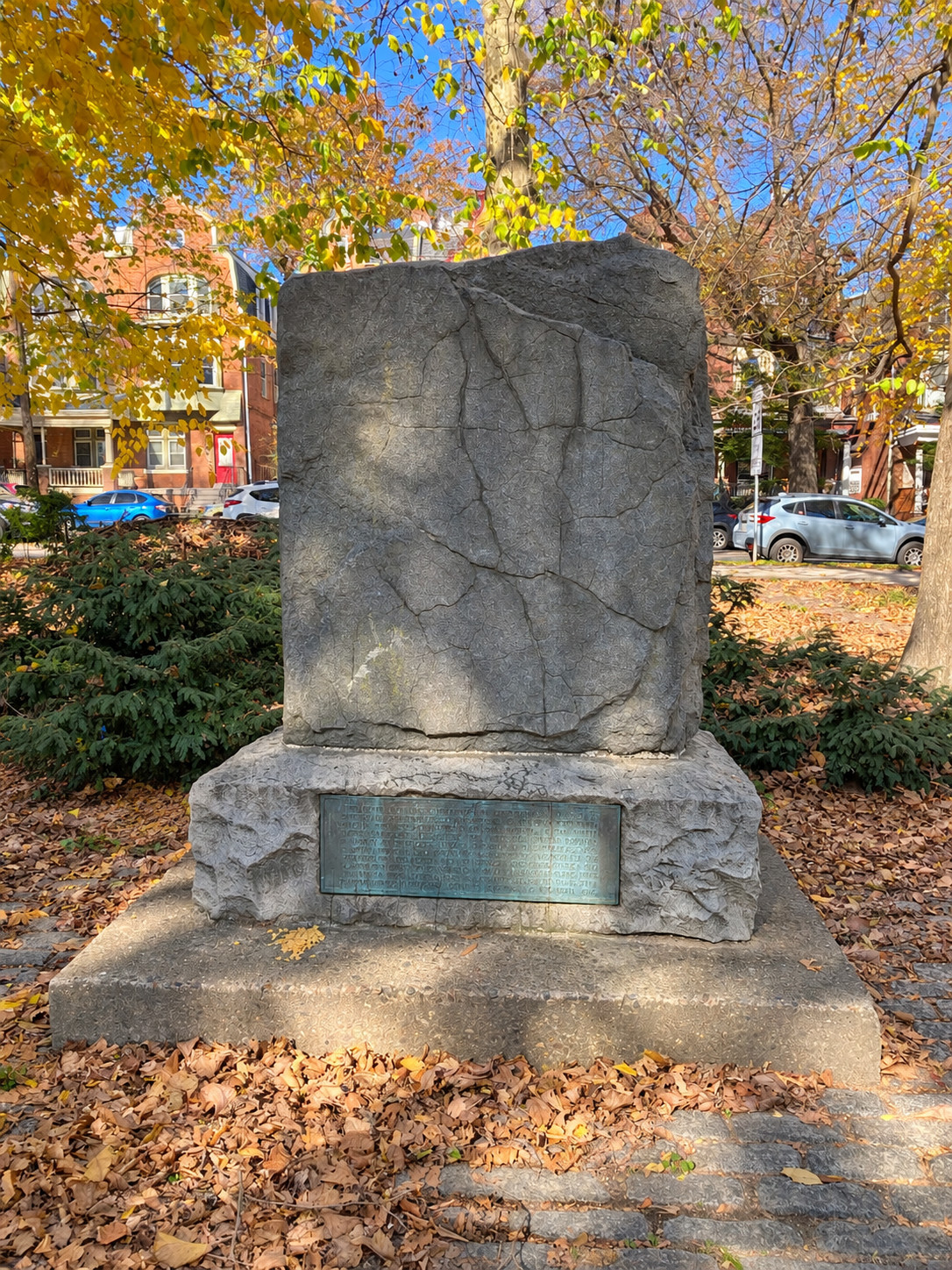
The Gettysburg Stone in Clark Park (Photo: West Philly Local)
This Saturday, Nov. 14 at 11 a.m., the Spruce Hill Community Association and Friends of Clark Park invite veterans, neighbors and history enthusiasts to gather at the Veterans Memorial by the Gettysburg Stone (44th and Baltimore) for a special morning of commemoration, reflection, and local history.
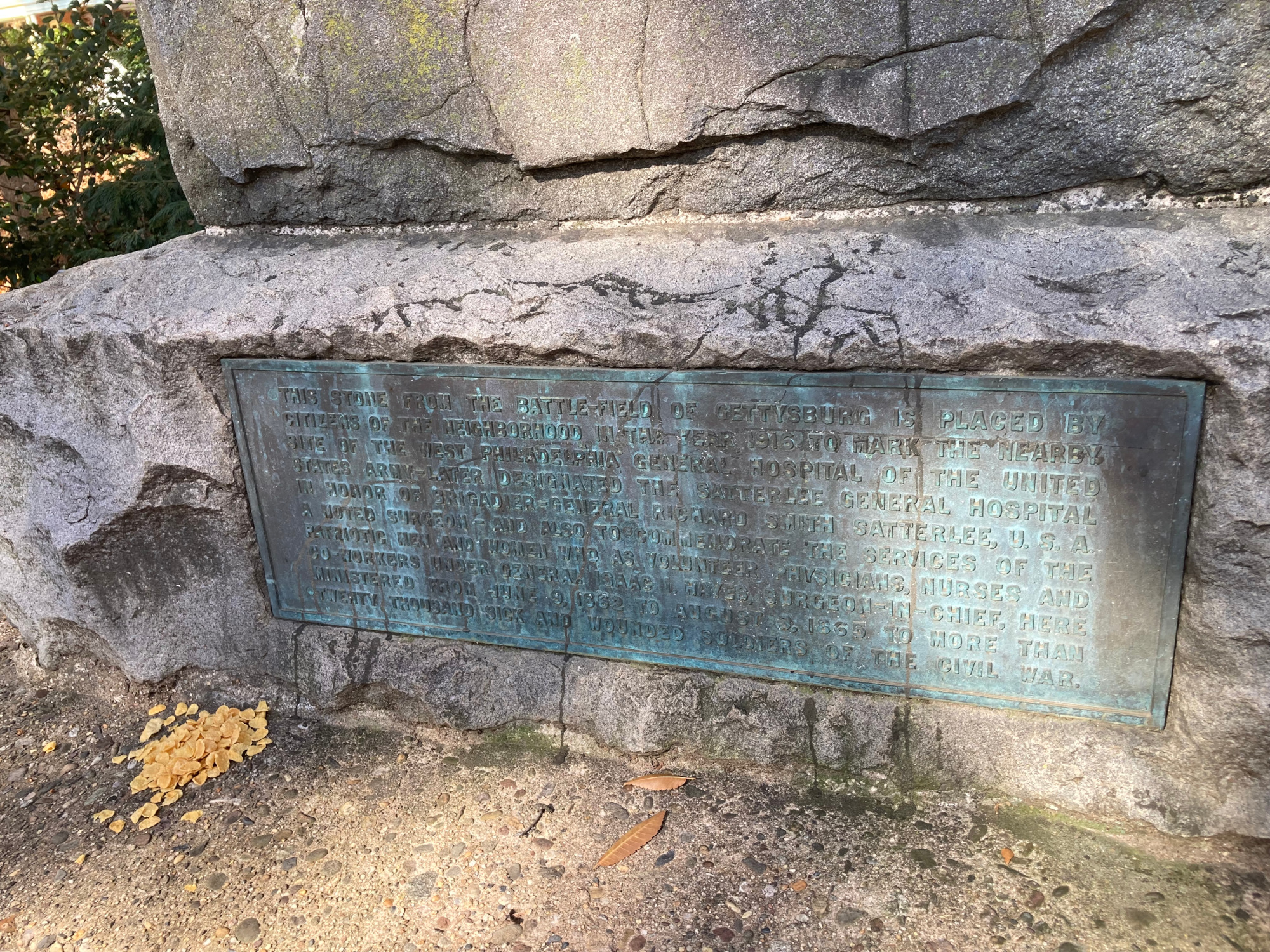
Coinciding with the historical hour of the World War I Armistice, the event will feature a live reading of the Gettysburg Address delivered by one of University City’s local thespians. The presentation will take place near the park’s historic monument—a genuine stone from the Gettysburg Battlefield that marks the site’s legacy.
In addition to the reading, Dr. Joe Lex, a veteran and physician, will speak about the challenging and crucial role of medicine in military service. All veterans, loved ones, community members of all ages, and history fans are welcome to attend this hour of solemn contemplation and respect.
A Look Back: Satterlee General Hospital & Clark Park
The morning’s commemorations are deeply tied to the land beneath our feet. Clark Park holds a remarkable and often overlooked history as the site of Satterlee General Hospital, the largest Union Army Hospital during the Civil War.
The sprawling 16-acre hospital complex occupied the area roughly bounded by 42nd to 45th Streets and Baltimore Avenue to Pine Street—right in the heart of the modern Spruce Hill neighborhood.
Built in 1862 and commanded by Dr. Isaac Israel Hayes under Surgeon General William A. Hammond, the hospital operated until August 3, 1865. It functioned as a self-contained “micro-city” featuring 33 to 34 pavilion-style wards, hundreds of tents, a library, post office, kitchens, and its own newspaper – The Hospital Register.
It held anywhere from 2,500 to over 4,500–6,000 beds following major Civil War engagements like Antietam, Second Manassas, and Gettysburg.
The facility treated tens of thousands of wounded and sick Union soldiers (with estimates ranging from roughly 50,000 to over 120,000 across the war), heavily supported by the Roman Catholic Sisters of Charity and Daughters of Charity.





Recent Comments